Choosing the right financial institution is an important decision that can have a lasting impact on your financial goals, savings, and everyday money management. With traditional banks, online banks, and credit unions offering different benefits, fees, interest rates, technology, and customer service experiences, it can be difficult to determine which option is right for you. Understanding the key differences between these three types of financial institutions can help you make a more informed decision based on your personal needs and financial priorities.
Traditional Banks
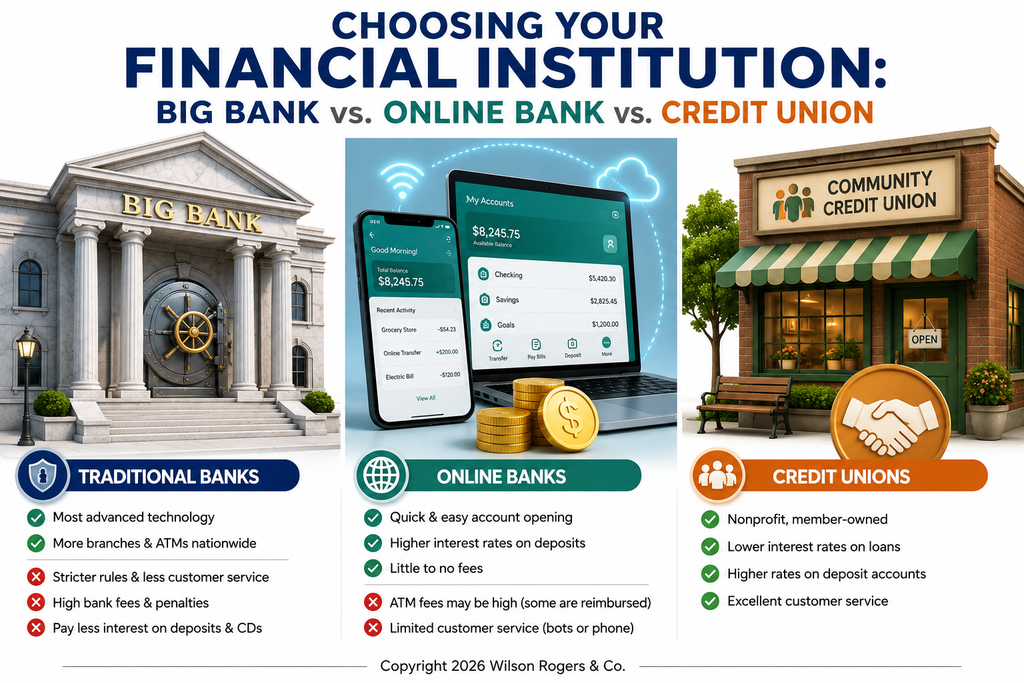
Traditional banks are banks you typically see around such as, Chase, Bank of America, Wels Fargo, and many more. These banks usually operate for profit and are owned by investors. Traditional banks have the most advanced technology that is in the banking market. They also have more branches and ATMs nationwide. The downside of traditional banks is they have stricter rules and less customer service skills. They also have high bank fees and penalties. Another downside is they pay less interest for deposit accounts and CDs.
Online Banks
Online banks do not have physical locations everything is done through the Webb or a mobile app. Opening an account can be a quick and simple process due to the fact you can doing while sitting on the couch. Once you identify yourself and get all the information set up your account can be up and running in just a couple of minutes. One of the benefits of online banking is they pay higher interest rates on deposit accounts. This is because they do not have the extra expenses traditional banks have so, they have money to spare. Another benefit is that they charge little to no fees due to the same reason why they charge higher interest rates they have less expenses to worry about. The downside to online banking is the fees on selected ATM services may be high because they might not own those ATMs but some online banks will reimburse those ATM fees. Another downside would be the customer service expect yourself to be talking to a bot over text or a phone call when you need help.
Credit Unions
Credit Unions are nonprofit institutions owned by members collectively. Credit unions tend to offer lower interest rates on loans and higher rated on deposit accounts. This is typically a better option especially if interest rates on loans are high. They also offer great customer service that tops the other two banking methods.
CONCLUSION
Choosing the right financial home comes down to balancing convenience with cost. If you value nationwide physical branches, face-to-face assistance, and cutting-edge mobile tools above all else, a traditional institution like Chase or Bank of America fits your lifestyle despite the heavier fee structure.
Conversely, if you want your money to work harder through high-yield savings and low fees, and you are comfortable managing everything from a smartphone or laptop, an online bank is the smartest route.
For those who prioritize personalized, community-focused service alongside competitive rates on both loans and deposits, a credit union delivers the ideal middle ground. Weighing these distinct advantages and drawbacks against your personal spending and saving habits will point you directly to the banking partner that best serves your financial goals.