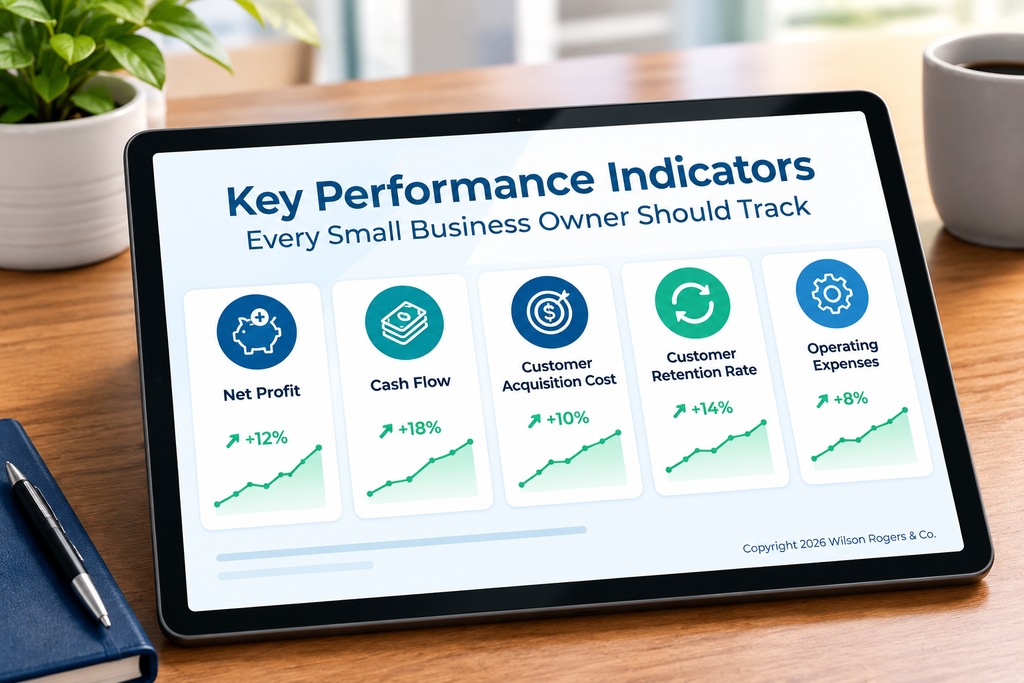
If someone asked how your business is doing today, how would you answer?
Many business owners immediately look at one number, the balance in their bank account. While it’s certainly important to know how much cash you have available, your bank balance doesn’t tell the whole story. You might have a healthy balance today because a large customer finally paid an invoice, or you may have just purchased inventory that won’t generate revenue for several months.
Your bank account shows where you are today. Key Performance Indicators (KPIs) help you understand where your business is headed.
KPIs are simply measurements that help you evaluate the health of your business. They allow you to spot trends, identify potential problems early, and make decisions based on facts rather than assumptions. The good news is you don’t need dozens of reports, you only need to focus on a handful of numbers that truly matter.
Gross Profit Margin
One of the first numbers every business owner should understand is gross profit margin.
This tells you how much money remains after covering the direct costs of providing your product or service. If your gross profit margin begins to shrink, it’s often a sign that material costs, labor, or other direct expenses are increasing faster than you’re pricing.
Watching this number over time can help you decide whether it’s time to adjust your pricing or improve efficiency.
Net Profit Margin
Revenue is exciting, but profit is what keeps your business healthy.
Your net profit margin shows what remains after every expense has been paid. It’s possible to have your best sales year ever while making less money than the year before if your expenses have quietly increased.
If your sales continue to grow but your profits don’t, it’s worth taking a closer look at where your money is going.
Cash Flow
One of the biggest surprises for many business owners is learning that a profitable business can still experience cash flow problems.
That’s because profit and cash aren’t the same thing.
Cash flow measures when money actually comes into and leaves your business. If customers are slow to pay, or large expenses come due before income arrives, cash can become tight even when the business is profitable on paper.
Healthy cash flow gives you flexibility and allows you to invest in your business with confidence.
Accounts Receivable
Every unpaid invoice represents money you’ve earned but haven’t collected.
Monitoring your accounts receivable helps you understand how quickly customers are paying. If invoices remain outstanding for long periods, your cash flow will eventually suffer.
Simple improvements like invoicing promptly and following up on overdue payments can make a noticeable difference.
Customer Acquisition Cost
Growing your business usually requires investing in marketing and sales.
Customer Acquisition Cost measures how much you’re spending to gain each new customer. If it costs more to acquire a customer than that customer ultimately contributes to your business, your growth strategy may need to be reevaluated.
Understanding this number helps ensure your marketing dollars are working as hard as you are.
Customer Retention
Winning a new customer is important but keeping one is often even more valuable.
Returning customers tend to spend more overtime, referring to others, and cost far less than constantly finding new business. A strong customer retention rate often reflects consistent service and long-term relationships, both of which contribute to a more stable business.
Operating Expenses
Operating expenses have a habit of increasing little by little.
Software subscriptions, insurance premiums, payroll, utilities, and vendor costs can gradually grow without attracting much attention. Reviewing these expenses regularly helps you identify unnecessary spending before it begins affecting your profitability.
Small adjustments made consistently can have a significant impact over time.
Revenue Growth
Every business owner wants to see revenue increase, but the number itself doesn’t tell the full story.
It’s important to understand what’s driving that growth.
Are you serving more customers? Have existing customers increased their spending? Did you adjust your pricing?
Knowing the reason behind your revenue growth helps you make better decisions about where to invest your time and resources moving forward.
Focus on What Matters
One of the biggest mistakes business owners make is trying to monitor every metric available to them.
Instead, choose a handful of KPIs that align with your goals and review them consistently. Looking at these numbers, each month will give you a much clearer picture of your business than simply checking your bank balance.
The goal isn’t to collect more information, it’s to understand the information that helps you make better decisions.
Final Thoughts
Running a successful business requires more than working hard; it requires understanding your numbers. Tracking a few key performance indicators can help you identify opportunities, recognize potential problems before they become major issues, and make decisions with greater confidence.