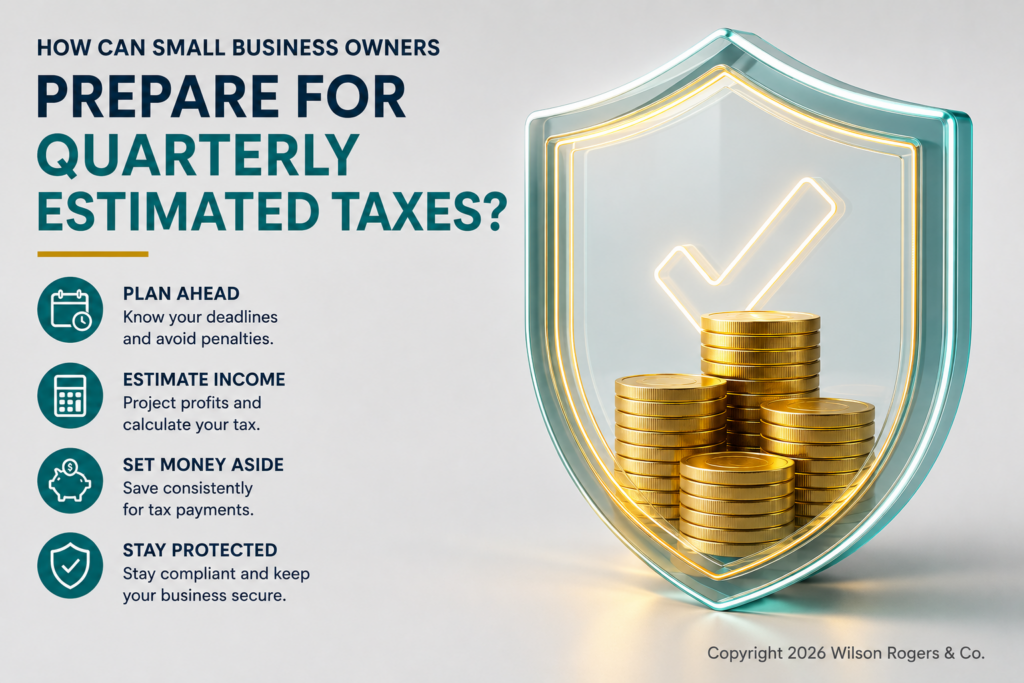
Quarterly Estimated Taxes: Who Must Pay Them and How Small Business Owners Can Prepare
When taxes aren’t withheld from your income, the IRS expects you to pay as you go. That’s where quarterly estimated taxes come in. For many small business owners, freelancers, and individuals earning income outside a traditional job, understanding these payments is essential to avoiding penalties and staying on track financially.
Who Needs to Pay Quarterly Estimated Taxes
Quarterly estimated taxes apply to anyone who expects to owe at least $1,000 in federal tax for the year and doesn’t have enough withholding to cover it. This most commonly includes self-employed individuals such as freelancers, gig workers, sole proprietors, and single-member LLC owners. Because no employer is withholding taxes for them, they must pay throughout the year.
Partners and S-corporation shareholders also need to plan ahead. Even if profits stay in the business, owners are taxed on their share of income reported on Schedule K-1. S-corporation owners who receive wages may have some withholding through payroll, but additional pass-through income often requires separate estimated payments.
Real estate investors frequently owe estimates too, as rental income, short-term rental activity, and taxable property sales create income not subject to withholding. Individuals earning interest, dividends, capital gains, or cryptocurrency income may also need quarterly payments for the same reason.
Even W-2 employees can fall into the estimated tax category if their employer isn’t withholding enough or if they also earn income from a side business, rentals, or investments. Retirees may have to make quarterly payments as well when pension income, IRA withdrawals, RMDs, or taxable Social Security benefits aren’t covered by withholding. And anyone experiencing a major taxable event—such as selling a business, exercising stock options, or realizing large investment gains—may need to pay an estimated tax during the year to avoid penalties.
How Small Business Owners Can Prepare
Preparing for quarterly estimated taxes becomes much easier with the right system in place. Start by estimating your income early. Reviewing last year’s profit, comparing it to your current year-to-date numbers, and considering seasonal patterns can help you project your tax liability. If your income fluctuates, recalculating your estimates each quarter using the annualized income method can help you stay accurate.
Understanding what taxes are included is also key. Quarterly payments typically cover federal income tax and self-employment tax, which includes both Social Security and Medicare. Depending on your state, you may also need to include state or local taxes. S-corporation owners who run payroll may have less to pay quarterly, but pass-through income still needs attention.
Accurate bookkeeping is the foundation of good tax planning. Keeping your books current ensures that you know your net income and can make realistic tax projections. Whether you use accounting software, spreadsheets, or a bookkeeper, staying organized prevents surprises.
Setting aside money consistently makes quarterly payments far less stressful. Many business owners move a portion of each payment or each month’s profit into a separate tax savings account, so the funds are available when deadlines arrive.
The IRS provides Form 1040-ES to help calculate estimated payments, and the safe harbor rules allow you to avoid penalties by paying either 100% of last year’s tax (110% for higher earners) or 90% of this year’s tax liability. When it’s time to pay, using systems like Direct Pay, EFTPS, or your state’s online portals offers quick confirmations and reduces the risk of delays.
Meeting with a tax professional at least once a year can also provide clarity, ensure you’re not missing deductions, and verify that your business structure and payment strategy still make sense.
Conclusion
Quarterly estimated taxes are simply part of the financial rhythm for anyone earning income without withholding. With organized books, consistent savings, and a clear understanding of your obligations, these payments become manageable. Planning ahead helps business owners, investors, and independent earners stay compliant—and avoids costly surprises at tax time.